

Thoughtful notes for families building rhythms at home.
Practical guidance on routines, behavior support, and seasonal rhythms to help families create calmer, more connected days.
Social Skills & School Time (Quarter 3)
The last quarter of 2025 is here & it’s time to talk about various ways to support your learner throughout the holiday season between October and December. Whether you’re getting ready for holiday celebrations, family gatherings or looking back on the year with your family, we’ll be talking through it all.
Executive Function Without Fixing
Executive function struggles in children are often misunderstood as laziness, defiance, or lack of motivation when they’re actually deeply connected to regulation, nervous system capacity, and environmental demands. In this month’s Coffee Mugs & Clipboards blog, we’re reframing executive function through a compassionate, behavior-informed lens, exploring how to support planning, transitions, organization, and follow-through without shame, burnout, or constant correction. Discover practical strategies for building trust, reducing overwhelm, and creating sustainable rhythms at home for families.
From Strengths to Strategies
April often shows up with a lot of hope. More light. A little more energy. A sense that things should be getting easier. And for many families, that’s exactly when the pressure sneaks in because when something starts working, we worry about how to keep it working.
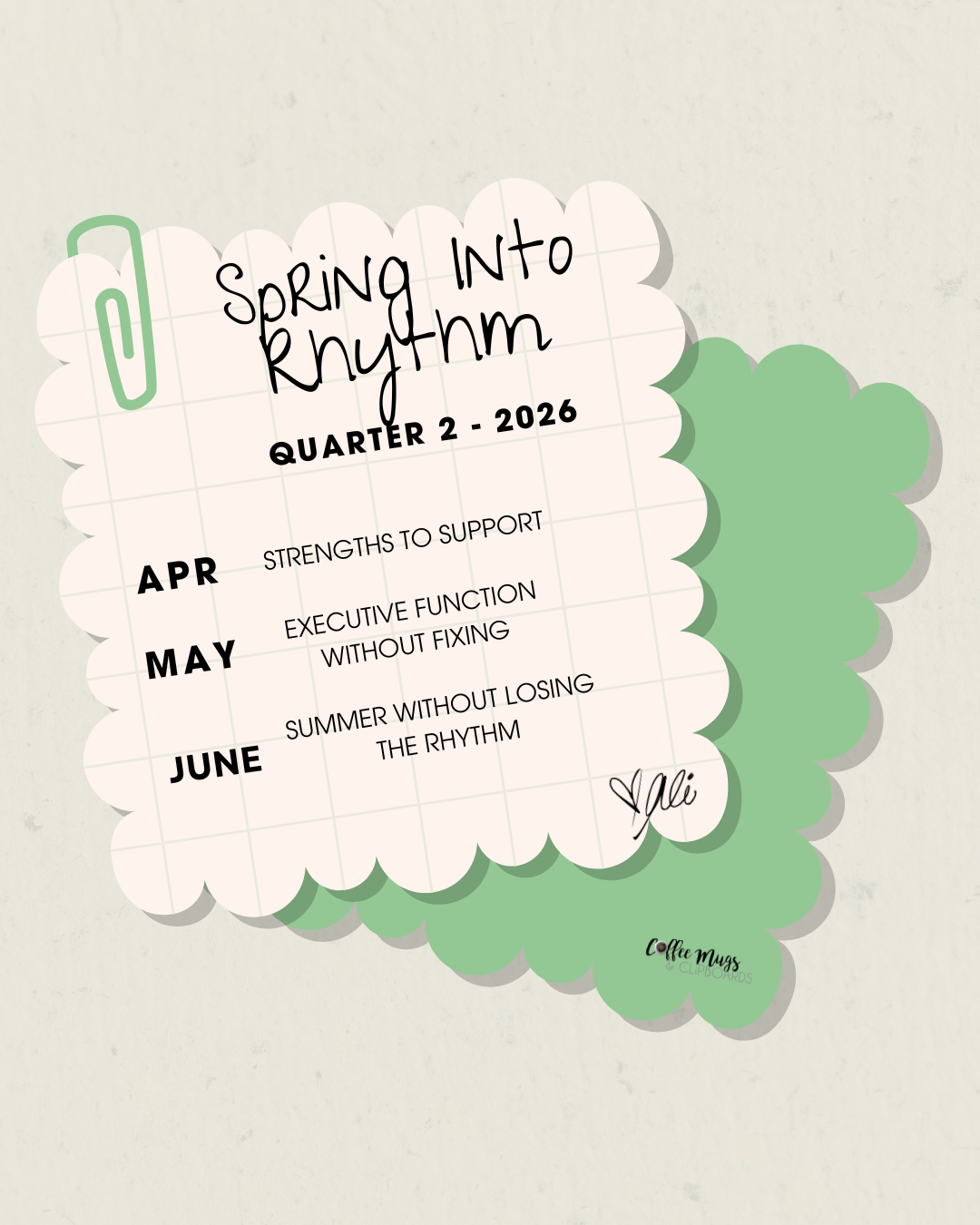
Spring Into Rhythm
After the rest and reset energy of winter, this season asks us for something different. Not perfection. Not productivity. But consistency that feels doable in real life. Because the truth is, most routines don’t fail because families aren’t trying hard enough.(You’re already working your tails off!) They fall apart because they were never designed to flex. And this quarter?
We’re shifting from trying harder — > to building smarter.
Calming Chaos and Reclaiming Rhythm in a Neurodivergent Home
March has a funny way of sneaking up on families—especially neurodivergent ones. One day it feels like you’re limping toward spring break, and the next day routines that mostly worked suddenly feel like they’re unraveling. If your home feels louder, more reactive, or harder to steady right now, I want you to hear this first: You’re not doing anything wrong.
Let’s talk about what’s actually happening—and how a gentle spring reset can help calm the chaos and reclaim a rhythm that works with your family instead of against it.